
12th July 2026
If you're organising an event, one question will almost always come up:
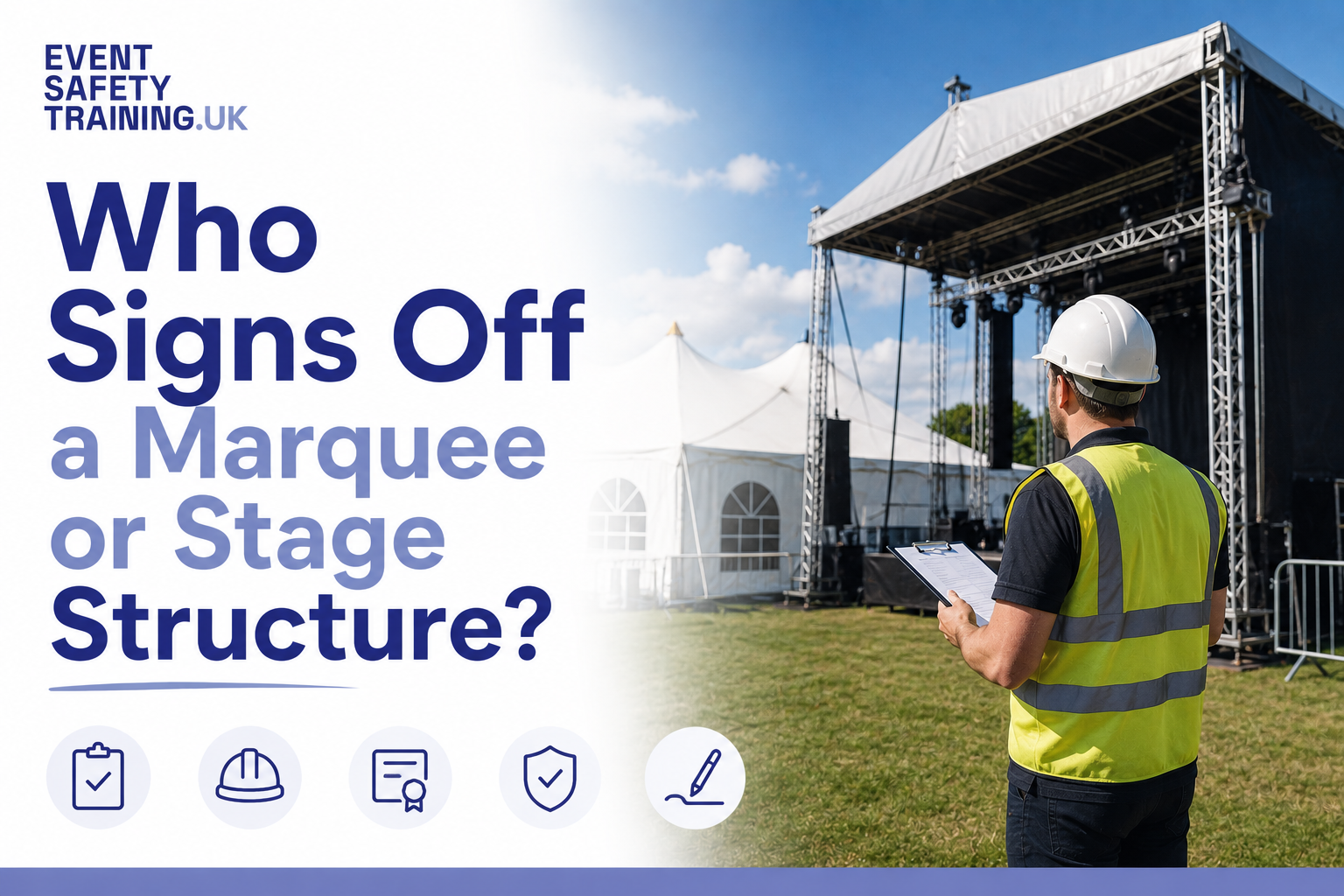
"Who signs off the marquee or stage structure?"
The answer isn't always straightforward.
The person or organisation responsible for approving a temporary structure depends on several factors, including the type of structure, its complexity, the event itself, and the requirements of the local authority. However, there are some key principles that apply to almost every event.
Understanding these principles can help you stay compliant, reduce risk, and avoid one of the biggest misconceptions in event safety.
Who Approves Temporary Event Structures?
Temporary structures such as marquees, stages, grandstands, towers and temporary buildings are normally approved by competent professionals with the appropriate qualifications and experience.
This may include:
Structural engineers
Temporary structure suppliers
Marquee companies
Stage and rigging contractors
Independent inspection specialists
Depending on the event, additional review or oversight may also come from:
Local authorities
Building Control
Fire and Rescue Services
Independent inspectors
Safety Advisory Groups (SAGs)
Exactly who is involved will vary from event to event, but competent design, inspection and certification are fundamental parts of the process.
Does Contractor Approval Remove the Organiser's Responsibility?
No.
This is one of the most common misunderstandings in the events industry.
Many organisers assume that once a contractor provides a signed certificate or structural approval, responsibility transfers entirely to the contractor.
It doesn't.
While contractors remain responsible for the work they undertake, the event organiser still retains overall responsibility for managing the event safely.
That means organisers should ensure they have:
Appointed competent contractors
Obtained the required structural documentation
Verified that structures are being used as designed
Managed any changes to layout or loading
Monitored weather conditions throughout the event
A signed certificate is an important document—but it is not a substitute for effective event management.
3. Temporary Structures Become Temporary Hazards
During the live event, stages, marquees, grandstands and other temporary structures are complete, inspected and operating as intended. During breakdown, everything changes.
As structures are dismantled, new hazards appear, including:
Changing structural loads
Incomplete structures
Exposed edges
Suspended loads
Moving plant and equipment
Areas that were perfectly safe during the event can become hazardous within minutes.
This is why exclusion zones, competent supervision and phased dismantling are so important throughout the de-rig process.
What Documentation Should You Have?
Most temporary structures should be supported by appropriate documentation before the event opens.
Depending on the structure, this may include:
Structural engineering calculations
Design drawings
Build completion or sign-off certificates
Inspection reports
Wind management plans
Ballast calculations
Fire certification
Manufacturer's guidance
The exact documents required will vary depending on the type of structure and the event, but they should be available well before opening day.
Waiting until the morning of the event to chase paperwork is rarely a good strategy.
Questions Every Event Organiser Should Ask
You don't need to be a structural engineer to manage temporary structures effectively.
What you do need is the confidence to ask the right questions.
Consider asking:
Who inspected this structure?
Has it been signed off by a competent person?
Are all approval documents complete?
What are the maximum wind operating limits?
What is the severe weather procedure?
Has anything changed since the original design?
Are there any restrictions on loading or equipment attached to the structure?
These simple questions can uncover issues long before they become serious safety problems.
The Best Event Organisers Stay Curious
Successful event safety isn't about knowing every technical detail.
It's about asking questions, checking assumptions, and making sure the right people have done the right things.
Documentation, inspections and structural calculations are all essential, but they're only one part of safe event management.
The most effective organisers remain curious throughout planning, build, live operation and breakdown.
At Event Safety Training UK, that's one of our guiding principles:
Be curious. Ask questions. Keep people safe.
Want to Improve Your Event Safety Knowledge?
Whether you're organising festivals, community events, sporting events or corporate functions, understanding temporary structures is a vital part of safe event management.
Our IOSH-approved event safety courses help organisers, venues and contractors understand their legal responsibilities, ask the right questions, and manage events with confidence.