
12th July 2026
When people think about event safety, they usually picture the event itself, crowd management, emergency procedures, security, and keeping the public safe.
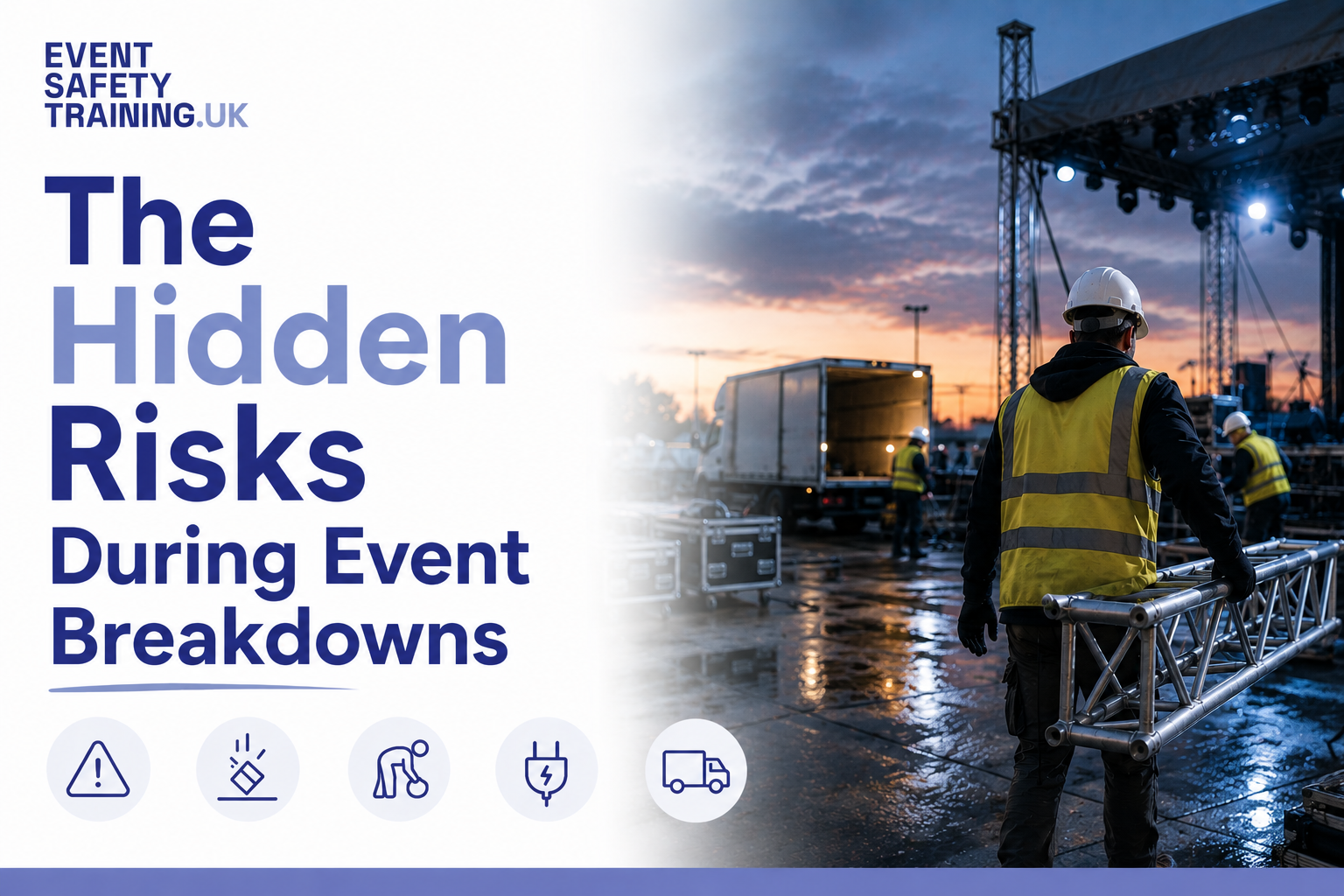
In reality, one of the most dangerous phases of any event often begins after the audience has gone home.
The breakdown, or de-rig, is when risk levels increase. People are tired, attention drops, vehicles move onto site, structures begin to come down, and everyone wants to get home as quickly as possible.
Understanding these hidden risks can help event organisers reduce incidents and ensure everyone gets home safely.
Why Event Breakdowns Are High-Risk.
By the time an event finishes, crews may have worked long hours over several consecutive days. The excitement of the live event is over, but the work isn't.
The pressure to dismantle the site quickly often creates the perfect environment for accidents.
Here are five of the biggest risks every event organiser should plan for.
1. Fatigue Leads to Poor Decisions
Fatigue is one of the biggest contributors to workplace accidents, and event breakdowns are no exception.
After long shifts, crew members are more likely to:
Rush tasks
Take shortcuts
Miss obvious hazards
Forget procedures
Communicate less effectively
Even experienced professionals become more susceptible to mistakes when they're tired.
A good breakdown plan recognises that fatigue is inevitable and puts controls in place to reduce its impact, including realistic schedules, adequate supervision and sensible working hours.
2. Vehicle Movements Increase Dramatically
As soon as the public leaves, the site quickly fills with vehicles.
Forklifts, telehandlers, articulated lorries, vans and contractors all arrive to collect equipment and begin dismantling infrastructure. At the same time, pedestrians are still moving around the site.
Without careful planning, this creates one of the highest-risk activities during any event.
Good traffic management should include:
Clearly segregated pedestrian routes
Designated vehicle access points
Speed limits
Banksmen or vehicle marshals where required
Effective communication between contractors
Vehicle and pedestrian segregation remains one of the most important controls during breakdown operations.
3. Temporary Structures Become Temporary Hazards
During the live event, stages, marquees, grandstands and other temporary structures are complete, inspected and operating as intended. During breakdown, everything changes.
As structures are dismantled, new hazards appear, including:
Changing structural loads
Incomplete structures
Exposed edges
Suspended loads
Moving plant and equipment
Areas that were perfectly safe during the event can become hazardous within minutes.
This is why exclusion zones, competent supervision and phased dismantling are so important throughout the de-rig process.
4. Communication Starts to Break Down
Ironically, communication is often strongest while the event is live. Once the show finishes, communication can deteriorate surprisingly quickly.
Crew members leave site. Supervisors finish their shifts. Radios are handed back. Contractors begin working independently.
Without clear communication, coordination suffers and risks increase.
The breakdown phase should maintain the same clear chain of command, reporting procedures and communication systems used during the live event.
5. Everyone Wants to Leave Quickly
At the end of a long event, everyone shares the same goal: finish the job and go home.
Venues want the site returned. Suppliers want their equipment back. Contractors want to get to their next job. The temptation is to work faster.
Unfortunately, speed and safety rarely work well together.
The safest breakdowns aren't necessarily the quickest—they're the best organised.
Good planning, realistic timescales and proper supervision will almost always deliver a safer and more efficient de-rig than rushing to finish.
Planning a Safe Event Breakdown
A successful event doesn't end when the last visitor leaves.
The breakdown phase deserves just as much planning as the build and the live operation.
Event organisers should ensure they have:
A documented breakdown plan
Clear contractor responsibilities
Vehicle management arrangements
Safe dismantling procedures
Effective communication systems
Adequate supervision
Weather monitoring where temporary structures remain in place
Fatigue considered as part of operational planning
By recognising where risks increase, organisers can prevent accidents and ensure the event ends as safely as it began.
Improve Your Event Safety Knowledge
Understanding the risks associated with event breakdowns is just one part of delivering safe, professional events.
Our IOSH-approved event safety courses are designed specifically for event organisers, venues, contractors and event professionals who want practical knowledge they can apply immediately.
Whether you're managing a festival, sporting event, community celebration or corporate event, our training will help you plan safer events from build-up to breakdown.
Get in touch if you think we can help you organise safer events.